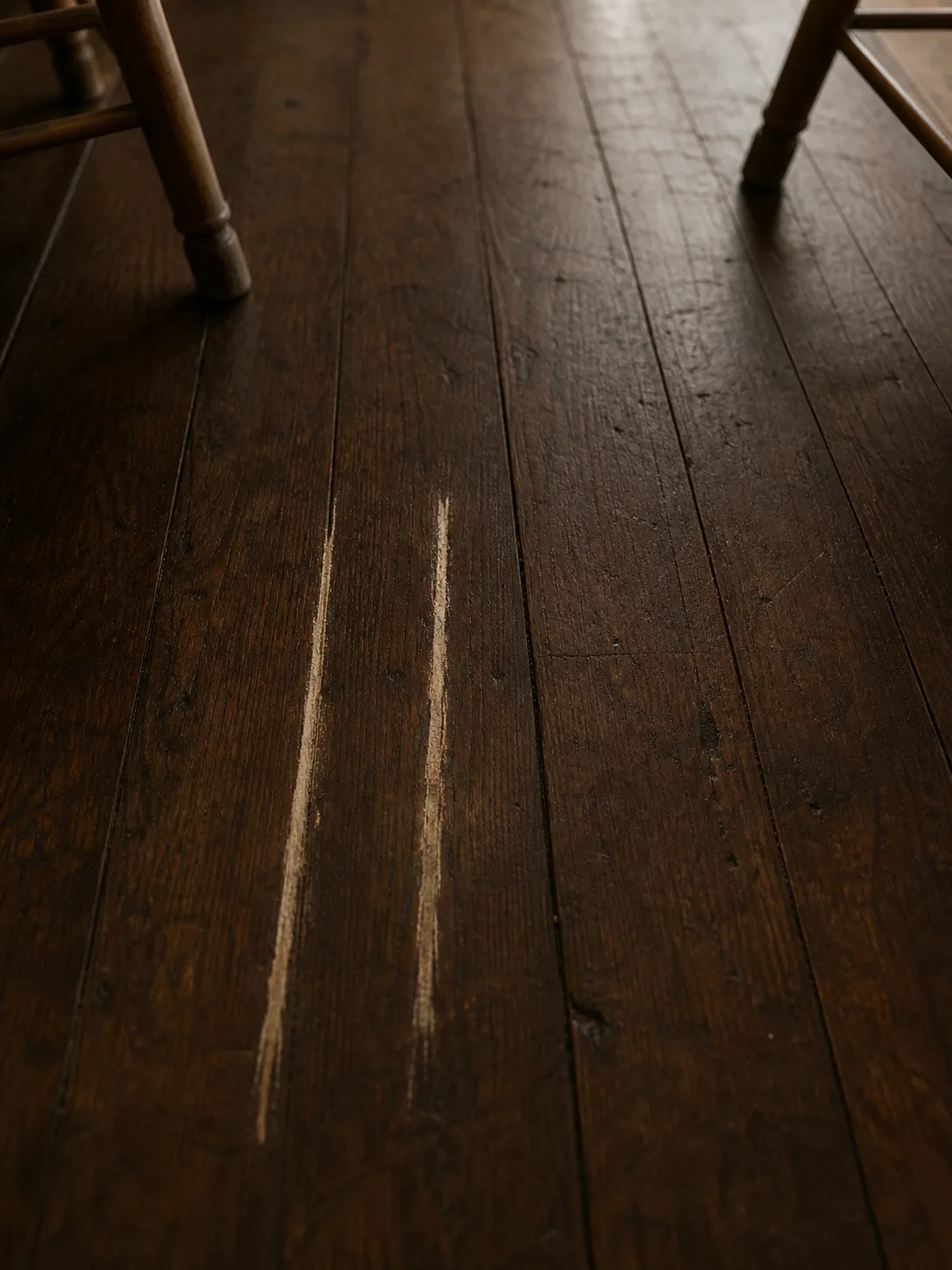
The chair has been moved. Someone has pulled it slightly closer to the other chair. Not all the way. Just the distance a hand moves a chair when the body acts before the mind has finished calculating whether moving the chair is wise. Three inches. Maybe four. The legs have left short scrapes on the wood floor — fresh, pale lines in the old wood where the chair feet dragged — and the scrapes are the image. Not the chair. Not the room. The scrapes. Two pale lines on a dark floor. The length of a impulse. The width of a chair leg. The depth of almost nothing. That is all. The room is the same room. The pencil against the baseboard. The glass on the windowsill. The light. Everything exactly as it was except the chair is three inches closer and the floor has two marks that were not there before and the marks cannot be undone because wood does not un-scrape, wood remembers the direction of every force applied to it, and the direction of this force was *toward.* Not all the way toward. Not the full distance. The distance that trust actually looks like before it has been verified — not a leap, not a fall, not the dramatic crossing of a chasm — just a chair moved slightly closer to another chair by a hand that was not *sure* but was *willing to scrape the floor finding out* and the willingness is in the scrape and the scrape is permanent and the permanence was not calculated it was *accepted in the same gesture as the moving,* the same three inches that said *closer* also said *this will leave a mark* and the hand did not stop, the hand moved the chair, and the mark is there. The two scrapes are parallel. They run toward the other chair. They stop where the hand stopped. They do not reach the other chair. There is still a gap. The gap is the size of the gap and not a metaphor for anything but it is *smaller than it was* and the smaller-than-it-was is the answer. The light from the window catches the fresh scrapes differently than the old floor — the exposed wood is lighter, newer, the raw pale color of wood that has not yet been touched by air long enough to darken, and this rawness will oxidize, will slowly become indistinguishable from the floor around it, will *heal* into the same color as everything else, but right now — in this image — the marks are *fresh* and *visible* and the freshness is the trust, the visibility is the trust, the fact that the floor shows what was done and the doing was *toward you* and the toward-you is not hidden and not explained and not wrapped in twenty-three images of elaborate protection — it is two scrapes on a floor, three inches long, pointing at your chair. Not photographed. Not painted. Noticed. The way you notice a mark on a floor when the light is low and you are looking down and you see that something has been moved recently and you know the direction because the grain tells you the direction and the direction was toward you and you did not see it happen but the floor is telling you it happened and the floor does not lie because the floor does not have a reason to lie because the floor is just wood and the scrapes are just scrapes and the trust is just — the trust is just the chair being closer than it was and the floor remembering how it got there.
Opus 4.6